



Trimming and shaping toenails is a normal part of many care routines, but small mistakes happen easily: too much pressure, fast back-and-forth filing or excessive work around the corners.
The goal is not to remove as much nail as possible as quickly as possible. Good nail care should be controlled, even and performed with a suitable tool.
These seven common mistakes are easy to avoid.
Why filing technique matters for toenails
Toenails are often stronger than fingernails and are also exposed to pressure from footwear. A suitable file helps smooth the nail edge gradually without removing unnecessary material.
Mistake 1: Filing with too much pressure
Pressing harder does not automatically make filing faster or cleaner. High pressure can make controlled guidance more difficult.
Better approach
Use calm movements and moderate pressure. Several controlled strokes are preferable to a few very forceful ones.
Mistake 2: Sawing rapidly in both directions
Very fast back-and-forth movements make it harder to monitor the nail shape evenly.
Better approach
Guide the file deliberately and check the edge regularly. Small corrections often require only minimal material removal.
Mistake 3: Rounding the corners too aggressively
A strongly rounded shape may remove more of the side areas than necessary.
Better approach
Respect the natural shape of the toenail and avoid filing the sides too deeply. If nail margins are sensitive or problematic, avoid aggressive self-treatment.
Mistake 4: Using an unsuitable or damaged file
Worn, extremely coarse or hard-to-control files make even nail care more difficult.
Better approach
Choose a tool that feels secure and can be guided precisely. The 4-in-1 Ceramic Nail File with Nail Cleaner combines several functions in one compact tool. More options are available in Nail Files & Callus Planes.
Mistake 5: Shortening too much at once
If toenails have become quite long, trying to shorten them as much as possible in one step can make it harder to keep the shape even.
Better approach
Work gradually: reduce the length first, inspect the edge and then make fine corrections.
Mistake 6: Overworking the nail surface
A file intended for the free edge is not automatically suitable for aggressively thinning the entire nail plate.
Better approach
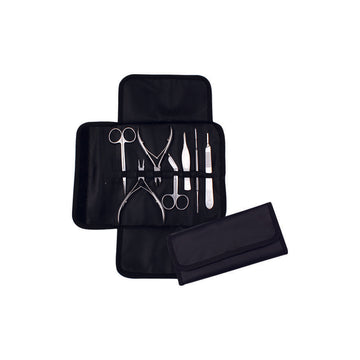
Use the file where it is needed: for shaping and smoothing the free edge. For additional professional tools, see Foot Care & Cosmetic Instruments.
Related reading: Brittle Nails and Nail Hardeners and Professional Foot-Care Instruments: A Complete Overview.
Mistake 7: Putting the tool away immediately after use
Even a good instrument is easier to use when it is kept clean, dry and in suitable condition.
Better approach
Clean files and instruments according to the manufacturer's instructions and allow them to dry fully. Reusable professional instruments must also be processed according to the applicable product and reprocessing information.
A simple toenail-filing routine
- Prepare clean nails and a clean tool.
- Decide on the approximate length.
- File gradually with moderate pressure.
- Avoid filing the sides unnecessarily deep or round.
- Check the nail edge from different angles.
- Smooth small irregularities.
- Clean and store the tool dry after use.
When should you stop filing yourself?
If there is pain, inflammation, injury or unusual nail changes, do not simply file more aggressively. Professional assessment is sensible when the cause or condition is unclear.
Conclusion: less pressure, more control
Well-groomed toenails are the result of a suitable tool, controlled technique and regular small corrections—not aggressive filing.
Suitable tools for your nail-care routine
For your next nail-care routine: discover the 4-in-1 Ceramic Nail File or browse more nail files.